
Eight trend signals, searched in parallel.
Audio, hashtags, topics, formats, lengths, posting times, cultural moments, and challenges, each with its own research and ranking.
See what's actually trending across eight signal types right now, grounded in real sources, then feed the winners into your hooks.
"What's trending" is one of the most useful questions a creator can ask, and one of the hardest to answer honestly. Trending Context answers it by searching the live web across eight different signals at once, trending audio, hashtags, topics, formats, video lengths, posting times, cultural moments, and challenges, then ranks each by fit and momentum. Every item links back to a real source. It would rather show you three real trends than ten made-up ones.
You pick a mode ("I have a hook, tell me what's current around it" or "I have a niche, tell me what's trending in it"), choose your platforms, and enter your hook or niche. You get up to eight cards of ranked items to check off, then hand the ones you pick straight into Hook Generator in one click.
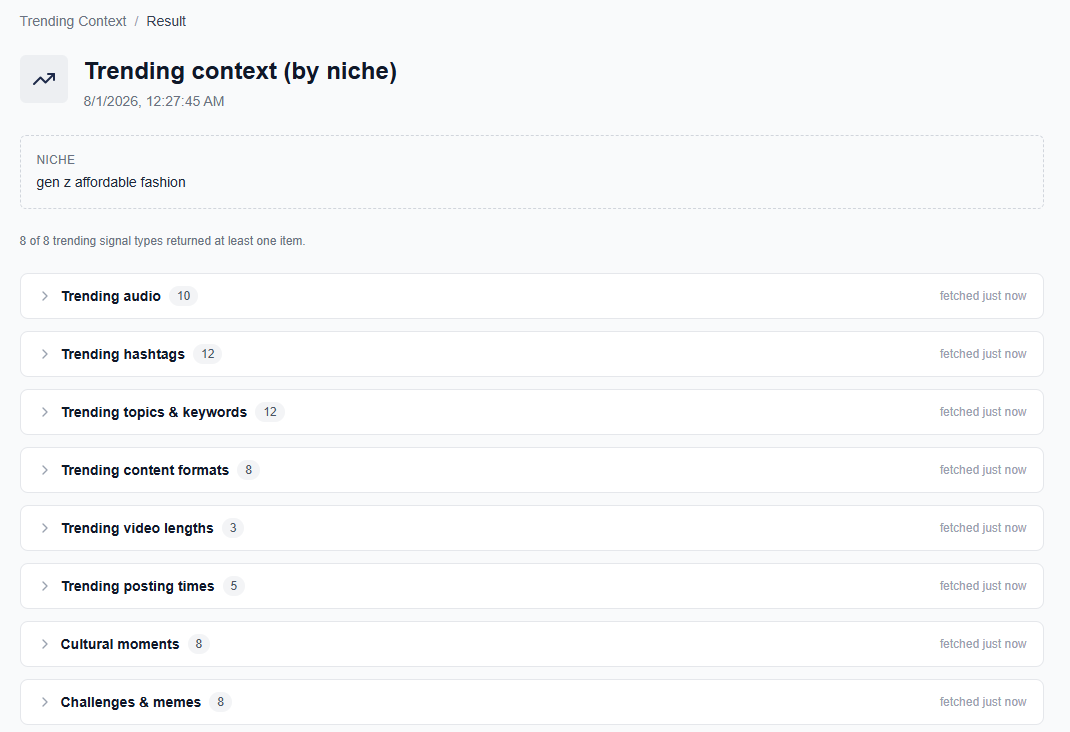
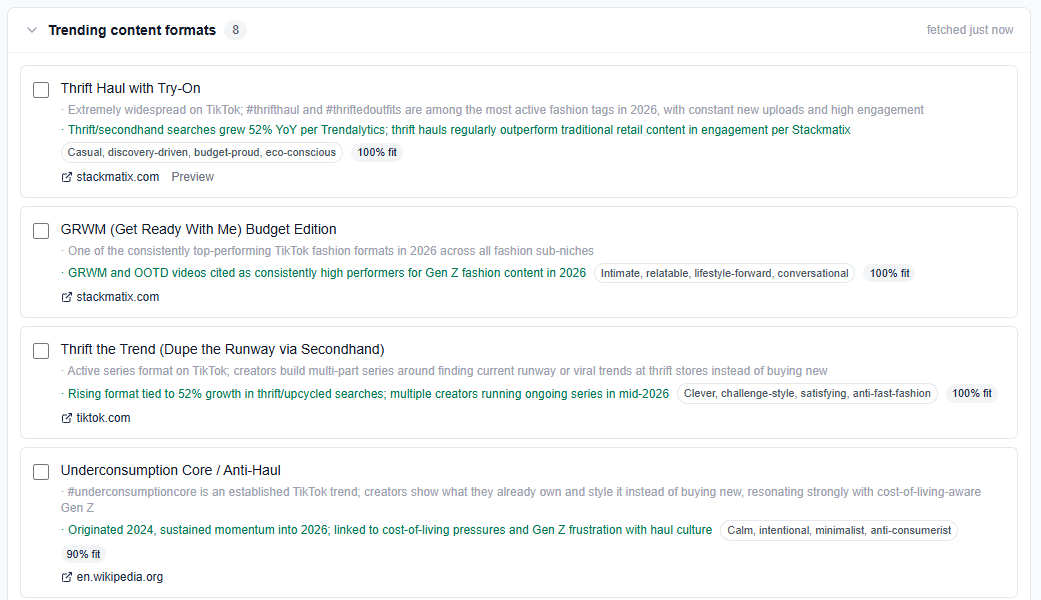
Audio, hashtags, topics, formats, lengths, posting times, cultural moments, and challenges, each with its own research and ranking.
Start from a hook you already have, or from your niche.
Every item carries a live source link. It returns fewer real trends rather than inventing any.
Five or more full categories = full charge. Exactly four = partial refund. Three or fewer, or a failure = all credits back. You never pay full for a lean result.
Check the trends you want, click once, and land in Hook Generator with them loaded in.
Use count, growth rate, fit score, and source, so you pick on data, not vibes.
A good hook rides even better on a current trend. Enter "by hook" mode to see the trending audio, hashtags, and formats moving right now around your specific idea.
Eight signal types, real sources, and a refund if the data's thin.
You might also like
Paste a topic, get ten first-three-seconds hooks engineered for retention, with the reasoning behind each one.
Score your profile copy against a creator-tuned rubric and get a prioritized rewrite list.
Set up your profile once, and every tool on the belt already knows your niche, voice, and audience.